


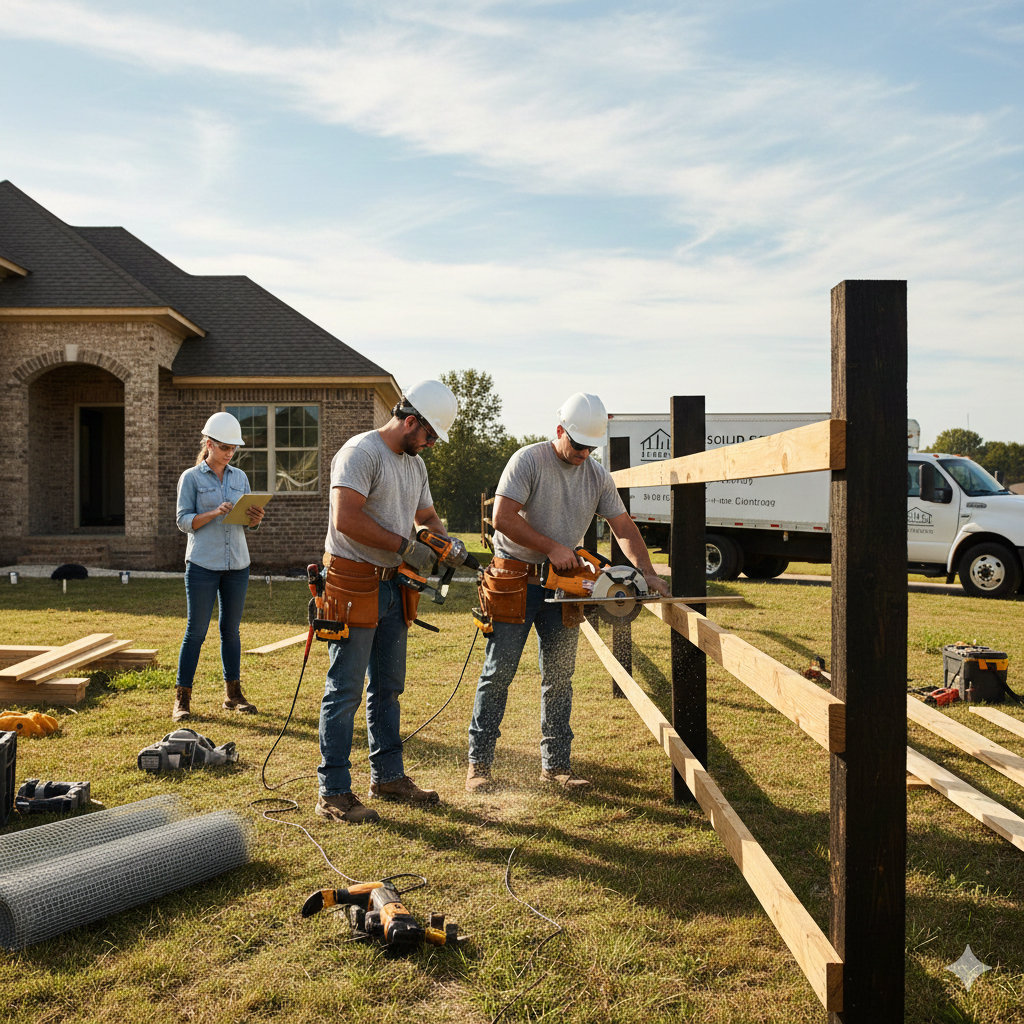
You want a fence that fits your property, budget, and long-term needs without surprises. Hire a qualified fencing contractor who inspects your site, explains material and permit options, and gives a clear written estimate so you know cost, timeline, and warranties up front.
This article Fence Contractor helps you evaluate contractors, compare materials and services, and understand the installation process so you make confident choices for a secure, attractive fence. Expect practical tips on selecting pros, questions to ask, and what to expect during installation to protect your investment.
Choosing the Right Fence Contractor
You need a contractor who matches your project scale, materials, and local regulations while offering clear pricing and reliable timelines. Focus on verifiable credentials, project experience, and real customer feedback to reduce risk and get the result you expect.
Key Qualifications and Certifications
Look for a licensed contractor with state or local licensing required for fencing or general contracting in your area. Licensing shows they met baseline training and financial requirements; ask to see the license number and verify it with your municipality.
Confirm insurance: the contractor should carry general liability and workers’ compensation. Request certificates of insurance naming you as additional insured while work is active if possible. This protects you from damage claims and on-site injuries.
Seek trade certifications and manufacturer credentials when using specialized materials (e.g., ornamental iron, composite, or vinyl). These certifications indicate training on product-specific installation methods and access to warranty support. Keep a written copy of any warranties offered.
Residential vs. Commercial Expertise
Decide whether your fence is residential—privacy, pet containment, aesthetics—or commercial—security, access control, perimeter lighting. Contractors often specialize; residential crews focus on picket, vinyl, and wood work while commercial teams handle chain-link, steel palisade, and gate automation.
Ask for project portfolios and scope details from similar jobs. For residential work, inspect examples for clean post setting, consistent board spacing, and finish work around gates. For commercial projects, verify experience with site grading, security codes, and heavy equipment use.
Confirm the contractor’s capacity for your timeline and scale. Commercial jobs may require bonded crews, traffic control plans, and coordination with other trades. For residential jobs, check their availability for seasonal demand and after-installation service.
Evaluating Customer Reviews and Testimonials
Look for recent, specific reviews describing timelines, communication, and problem resolution. Prioritize reviews that show before/after photos, mention permit handling, and note whether the crew left the site clean. One-off glowing reviews matter less than consistent, detailed feedback.
Check multiple sources: Google, Yelp, Better Business Bureau, and local community groups. Watch for patterns—frequent complaints about missed deadlines, surprise fees, or poor post-installation support are red flags. Follow up by calling names listed as references.
Ask the contractor for a list of recent clients and permission to visit completed sites. When you speak with references, ask about adherence to the written estimate, changes during the job, and whether the contractor honored warranties and returned for punch-list items.
Fence Installation and Services
You’ll learn material choices, how contractors plan and customize installs, and the warranty and maintenance options that protect your investment. Expect specifics on costs, durability, installation steps, and routine care.
Types of Fencing Materials
Choose material based on purpose, appearance, and budget. Common options include:
- Wood: Good for privacy and curb appeal. Typical lifespans are 10–20 years with pressure-treated posts and stain/paint. Expect yearly inspections for rot or termite damage.
- Vinyl: Low maintenance and resistant to moisture. Costs are higher up front than wood, but you avoid painting and frequent repairs.
- Chain-link: Least expensive per linear foot. Durable and quick to install; not ideal for privacy unless slats are added.
- Aluminum: Corrosion-resistant and lightweight. Works well for decorative front-yard fencing and pools; use welded or extruded pickets for strength.
- Composite and metal (steel): Composite resists decay and requires minimal upkeep; steel offers high security but can need coatings to prevent rust.
Ask your contractor for samples, local climate performance data, and a per-linear-foot breakdown of material plus installation labor to compare true costs.
Project Planning and Customization
A clear plan prevents delays and extra charges. Your contractor should:
- Perform a site survey to confirm property lines and locate utilities.
- Provide a detailed estimate listing material, labor, post depth, concrete, gates, hardware, and permit fees.
- Offer options for gate types, post spacing, staining/colors, and hardware finishes.
Expect post holes set below the local frost line and use concrete for stability unless a local code allows alternatives. Schedule excavation and installation dates, and require a written change-order process for design tweaks. Request a timeline with milestones: permit approval, material delivery, post installation, and final inspection.
Warranty and Maintenance Options
Warranties vary by material and contractor. Typical offerings:
- Manufacturer warranty: Covers material defects (e.g., vinyl panels, hardware) — check duration and exclusions.
- Labor warranty: Covers installation errors for a set period — often 1–5 years.
- Finish or coating warranty: Applies to paint, powder-coat, or sealant failures.
Maintenance plans contractors may offer:
- Annual inspections for loose posts, gate alignment, and fastener corrosion.
- Staining/painting schedules for wood every 2–4 years.
- Minor repair packages that include board replacement, gate rehanging, and re-tensioning of chain-link.
Get all warranty terms in writing and confirm what actions (weather events, improper homeowner modifications) void coverage.
About The Author