

You rely on copper every day — in your phone, your home wiring, and the electric vehicles reshaping transport — and understanding how it moves from ore to usable metal matters. Copper mining supplies the majority of that metal through large open-pit and underground operations that extract, crush, concentrate, and smelt ore to produce refined copper.
This article guides your understanding of where copper comes from, how modern mines operate, and what the mining process looks like from discovery to refined product. Expect clear explanations of industry scale, typical mine types, and the processing steps that turn rock into the copper that powers infrastructure and clean technologies.
Copper Mining Overview
Copper is essential to electrification, construction, and clean-energy systems. You will learn where the largest reserves lie, which regions dominate production, and the main deposit types that control mining methods and economics.
Global Copper Reserves
You should focus on countries with the largest known reserves and the types of resources they hold. Chile and Australia rank among the top for measured and indicated copper resources; Chile alone accounts for a substantial share of global reserves. Peru, Mexico, the United States, and Indonesia also hold large, economically viable deposits.
Reserve estimates vary by reporting standards and price assumptions. Look for figures reported as “proven and probable” or “measured and indicated” in national inventories and company filings. These figures influence investment, mine life, and regional supply security. Geology matters: porphyry systems often contain large, lower-grade ore bodies, while sediment-hosted and stratiform deposits can concentrate higher grades in smaller footprints.
Major Copper Mining Regions
You will encounter concentrated production zones that shape global supply chains. The Andean region—Chile and Peru—produces the largest share of mined copper. Codelco in Chile and other large operations drive bulk output from vast open-pit porphyry deposits. North America, especially the U.S. Southwest and Mexico, contributes significant volumes from both open-pit and underground mines.
Southeast Asia and Oceania supply notable amounts, with Indonesia and Australia hosting major projects and investment. Africa’s Zambia and the Democratic Republic of the Congo produce mainly from sediment-hosted and stratiform systems. Regional differences affect costs: labor, energy, infrastructure, and permitting all influence the competitiveness of mines you evaluate.
Types of Copper Deposits
Different deposit types determine extraction method, processing route, and unit costs. Porphyry copper deposits are the largest source of copper globally. They commonly host low-to-medium grades amenable to large open-pit mining and bulk flotation concentrators.
Sediment-hosted stratiform deposits, such as those in Central Africa and parts of North America, often offer higher grades and can be mined by both surface and underground methods. VMS (volcanogenic massive sulfide) deposits are smaller but high-grade and frequently mined underground. Secondary enrichments and oxide zones near surface may allow simpler hydrometallurgical processing (heap leach and solvent extraction-electrowinning) rather than full flotation-smelting chains.
Copper Mining Process
Mining copper requires targeted exploration, selecting an appropriate extraction method, and processing ore into high-purity copper products. You will read how deposits are found and evaluated, how miners choose surface or underground methods, and how ore is converted to concentrate and refined to cathode.
Exploration and Discovery
You begin with geological mapping, airborne geophysics, and soil or stream geochemistry to narrow target areas. Drilling programs—core and reverse-circulation—provide samples for assaying copper grade, associated metals, and alteration minerals that indicate ore controls.
You use resource modeling to estimate tonnage and grade, producing indicated and inferred resource classifications under reporting codes (e.g., NI 43-101, JORC). Economic studies follow: scoping, pre-feasibility, and feasibility analyses assess capital and operating costs, recoveries, and cutoff grades.
Environmental baseline studies and permitting work run in parallel. Community engagement, land access agreements, and water-rights evaluations often determine whether a project advances to mine planning.
Mining Methods
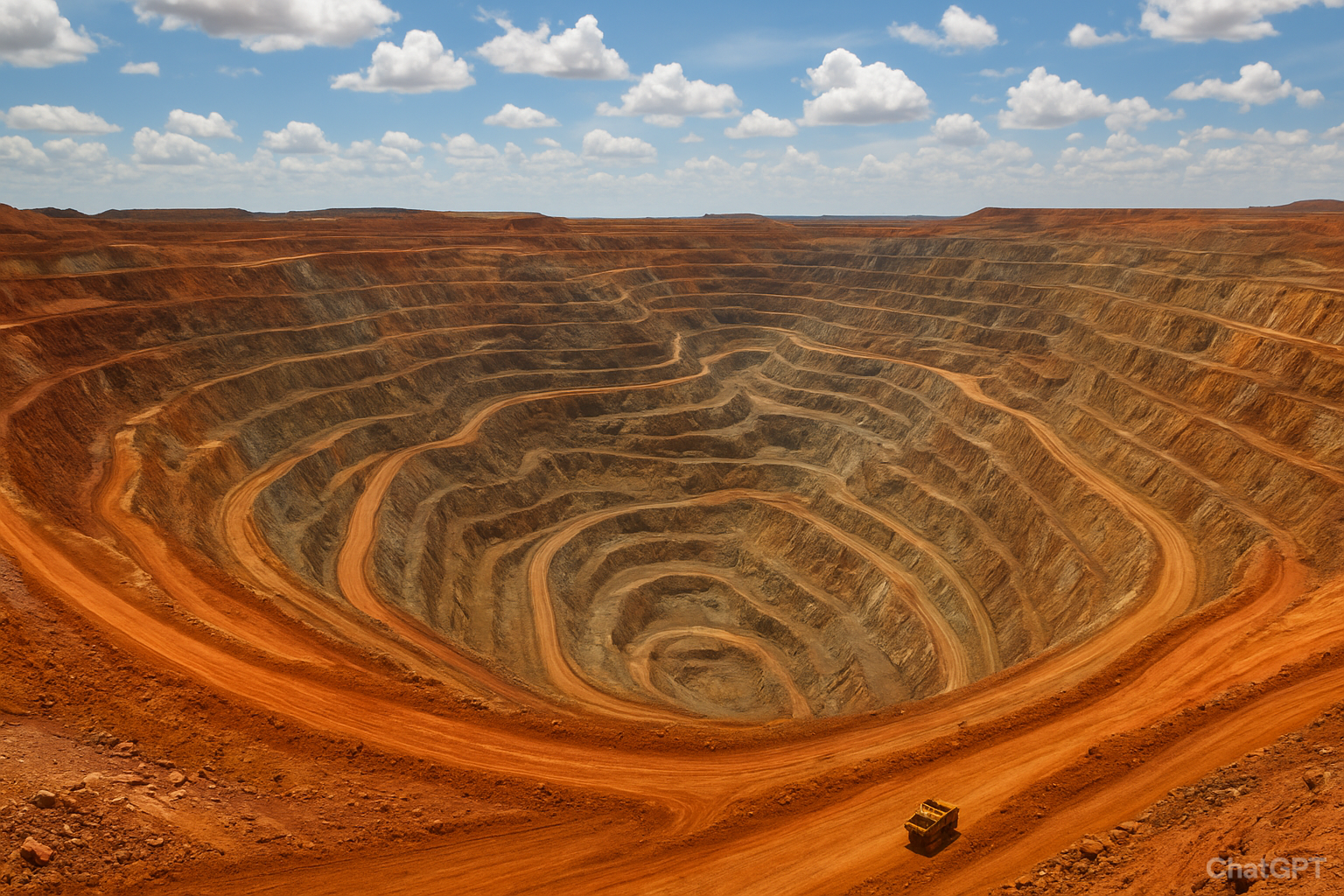
You choose open-pit mining for near-surface, bulk low-grade deposits and underground methods for high-grade, deeper orebodies. Open pits use drilling, blasting, truck-and-shovel or autonomous haulage, and staged benching to expose ore.
Underground options include block caving, sublevel stoping, and cut-and-fill. Block caving suits large, massive orebodies with lower grades; it relies on controlled collapse and large-scale material flow. Stoping methods suit narrower, higher-grade veins and require ground support and ventilation systems.
Key operational metrics you monitor include strip ratio, ore dilution, recovery, and cycle times. Ore is hauled to primary crushers or stockpiles; waste rock is managed separately with tailings and waste-rock facilities designed to limit environmental impact.
Processing and Refining
You first comminute ore (crushing and grinding) to liberate copper minerals, then separate ore types: sulfide ores usually undergo flotation; oxide ores use leaching. Flotation concentrates sulfide minerals into a >20–30% Cu concentrate using reagents and froth separation in multi-stage cells.
For oxide ores, heap leaching with sulfuric acid extracts copper into solution; solvent extraction-electrowinning (SX-EW) recovers copper as cathodes at >99.99% purity. Sulfide concentrate is smelted and converted, producing blister copper that undergoes fire- and electro-refining to reach commercial cathode quality.
You control metallurgical recovery, reagent consumption, and tailings handling to optimize metal yield and reduce environmental risk. Monitoring includes particle size distribution, flotation kinetics, solution chemistry, and smelter feed specifications.