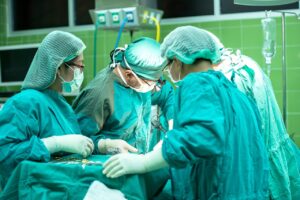



If you’re facing long public wait times or need a specific specialist, private surgery in Alberta gives you a faster, regulated alternative that still focuses on safety and quality. You can access accredited non-hospital surgical facilities and experienced surgeons to shorten delays and manage consultations, procedures, travel, and post-op care.
This article Private Surgery Alberta will show how private options work in Alberta, what types of procedures commonly move to private clinics, and what to expect when coordinating care—from finding a surgeon to arranging recovery. Use this guide to decide whether private surgery fits your timeline, budget, and medical needs.
Private Surgery Options in Alberta
Private surgery in Alberta covers a range of elective procedures, varying eligibility rules, and several accredited facilities that can shorten wait times. You’ll weigh procedure types, out-of-pocket costs, and facility accreditation when deciding whether private care fits your needs.
Types of Procedures Available
You can access many elective surgeries privately, especially day procedures and specialty operations. Common offerings include:
- Orthopaedics: arthroscopy, certain joint repairs, and soft-tissue procedures.
- General surgery: hernia repair, gallbladder removal, and selected laparoscopic operations.
- Gynaecology: diagnostic laparoscopy, hysteroscopy, and some minimally invasive procedures.
- Plastics and reconstructive surgery: cosmetic and functional repairs. Many private sites focus on same-day or short-stay cases to reduce resource needs. Complex, high-risk operations usually remain in public hospitals because they require intensive postoperative care and specialist backup.
Eligibility and Patient Requirements
You must have valid Alberta Health Care Insurance Plan (AHCIP) coverage for most services, though private payment options also exist. Providers typically require:
- Referral from a family doctor or specialist for surgical assessment.
- Preoperative assessments documenting medical fitness and medication lists.
- Consent forms and discussion of risks, costs, and recovery expectations. Some clinics restrict procedures by BMI, uncontrolled chronic conditions, or anticoagulant use. If you plan to pay privately, confirm what’s included: surgeon fees, anaesthesia, facility charges, supplies, and post-op physiotherapy.
Leading Private Surgical Facilities
Several accredited centres and networks perform private elective surgery across Alberta. Examples include private surgical centres in Calgary and Edmonton offering day surgery and short inpatient stays. Look for facilities that list:
- Accreditation by provincial regulatory bodies (College of Physicians and Surgeons of Alberta, Alberta Health Services approvals).
- Multidisciplinary teams: surgeons, anaesthesiologists, nurses, and rehabilitation staff.
- Clear pricing or patient-coordinator services to arrange consultations, scheduling, and post-op care. Ask clinics about infection-control records, emergency-transfer agreements with public hospitals, and typical wait times for the specific procedure you need.
Comparing Private vs. Public Surgery
Private surgery often shortens scheduling wait times for elective procedures, giving you control over timing and sometimes surgeon choice. Expect faster access for non-urgent cases and more predictable scheduling. Costs differ: public surgery covered by AHCIP has no direct surgical fee for insured procedures, while private options can require significant out-of-pocket payments or private insurance. Quality of care can match public standards, but verify facility accreditation and surgeon credentials. Consider trade-offs: private sites may not handle major complications on-site and rely on transfer protocols, whereas public hospitals offer full emergency support but longer waits.
Accessing Private Surgical Care
Private surgical care in Alberta lets you shorten wait times, select specific surgeons, and plan predictable out-of-pocket costs. You will need to weigh surgeon credentials, facility accreditation, payment methods, and whether your insurer or a lender will cover the procedure.
How to Choose a Private Surgeon
Start by verifying the surgeon’s Alberta Medical Association registration and College of Physicians and Surgeons of Alberta (CPSA) status. Confirm specialty certification (e.g., Royal College) and check for any disciplinary history on the CPSA website.
Ask for recent case volumes and outcomes for the specific procedure you need. Request complication and revision rates, and compare those numbers across two or three surgeons. Look for experience with the exact technique you want (e.g., arthroscopy, laparoscopic, robotic).
Visit the facility or ask about the surgical centre’s accreditation and infection-control policies. Confirm whether the surgeon operates in accredited private clinics, public hospitals during off-hours, or both. Read patient reviews but weigh them against objective data and direct references.
Costs and Payment Options
Get a full written estimate before booking. The estimate should list surgeon fees, facility or OR fees, anesthesia, implants or devices, pre-op tests, and post-op visits. Ask which line items are billed privately vs. billed to Alberta Health Services.
Compare pricing across clinics for the same bundled services. Some centres offer fixed-price packages that include travel coordination and post-op follow-up; others bill item-by-item. If you must travel interprovincially, include airfare, accommodation, and local follow-up in the total cost.
Confirm payment methods and timelines. Clinics commonly accept credit card, certified cheque, or bank transfer. Some surgeons require a non-refundable deposit to hold a booking; verify cancellation and refund policies in writing.
Insurance and Financing Considerations
Check your private health insurance policy for surgical coverage and any preauthorization requirements. Insurers often cover surgeon or hospital charges for medically necessary procedures but may exclude purely cosmetic work. Call your insurer and get confirmation in writing when possible.
Ask whether the clinic will submit claims directly to your insurer. If coverage is partial or absent, explore medical loans, payment plans offered by the clinic, or third-party healthcare financing. Compare interest rates and total repayment cost before committing.
Keep detailed receipts and copies of the surgeon’s letter describing medical necessity; you may need those for insurer appeals or tax purposes. If your procedure crosses provincial lines, verify whether your insurer imposes geographic limits on coverage.