

Finding a convenient recycling drop-off near you can be quicker than you think—check your city’s waste services and local recycling maps to locate drop-off sites, buy-back centres, or collection programmes and choose the option that fits your schedule. Use municipal resources or national directories to pinpoint nearby centres, confirm accepted materials, and learn hours so you don’t waste a trip.
This post Recycling Drop Off Near Me You’ll also discover community programmes and private collectors that accept specific items like electronics, plastics, or large quantities from businesses, giving you flexible ways to divert waste from landfill. Expect clear guidance on what each site accepts, simple sorting steps to speed up drop-off, and ways to turn recyclables into cash or community support where available.
How Local Recycling Centers Operate
You will encounter rules about what each facility accepts, when you can visit, and how to prepare items for drop-off. Knowing these details saves time and prevents rejected loads.
Accepted Materials and Restrictions
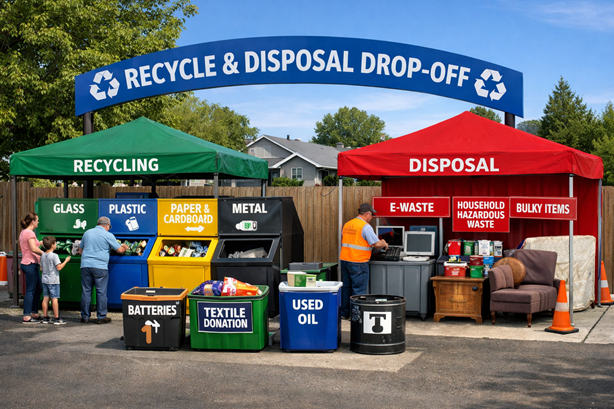
Most centers accept common recyclables: mixed paper, cardboard, glass bottles, aluminum cans, and rigid plastics labeled #1 and #2. Many also take electronics (e-waste), household batteries, light bulbs, tires, and appliances, but acceptance varies by site.
Hazardous materials—paint, pesticides, solvents, and certain batteries—often require special hazardous-waste drop-off events or separate facilities. Expect some centers to refuse contaminated, wet, or food-soiled paper and cardboard.
Check the center’s published list or map filter before you go to confirm specific items. Some centers impose weight, size, or quantity limits and may charge fees for appliances, tires, or large loads. Keep items sorted where possible to speed unloading.
Operating Hours and Access Requirements
Hours differ widely: many municipal centers operate weekdays with limited weekend times, while private depots may offer extended hours. Seasonal schedules are common; summer hours often expand, winter hours may be reduced.
Bring photo ID, proof of residency, or a utility bill if the center restricts service to residents. Commercial haulers sometimes need permits or different drop-off fees.
Arrive before closing and follow posted traffic patterns and staff directions. Some facilities require you to stay with your vehicle during unloading, while others provide staff assistance or fast-drop lanes where you can leave items in designated bays.
Preparation Tips for Drop-Off
Sort recyclables by material before you arrive: paper/cardboard, plastics, glass, metals, and e-waste in separate containers. Flatten boxes, remove food residue, and empty liquids; this prevents contamination and rejected loads.
Label boxes if you separate mixed materials and tape or secure broken glass in rigid containers to protect staff. For electronics, remove batteries and data-bearing devices or wipe personal data when possible.
If you expect a large or unusual load, call ahead about fees, appointment requirements, or restricted-item procedures. Bring tools (gloves, straps, hand truck) for bulky items and load vehicles so heavy items sit low and secure for safe unloading.
Community Resources for Sustainable Waste Management
Local governments, nonprofit organizations, and neighborhood programs provide drop-off centers, donation options, and hands-on education to help you reduce landfill waste. Use municipal schedules, vetted donation guidelines, and volunteer programs to make disposal and reuse practical and safe.
Municipal Programs and Special Collection Events
Check your city or county public works website for exact drop-off center locations, hours, and accepted materials. Many municipalities operate single-stream recycling for curbside pickup and separate drop-off sites for electronics, batteries, paint, and household hazardous waste.
Special collection events—often seasonal—accept bulky items, yard waste, and hard-to-recycle goods. You usually need to register or show proof of residency; some events charge small fees for mattresses or appliances. Look for transfer stations and county-run recycling centers if your curbside service doesn’t accept specific items.
Use online tools from your local DPW or county to view maps, find facility directions, and download set-out guides. Bring items clean and sorted according to posted rules to avoid rejection and contamination.
Donation and Reuse Options
Before dropping items at a recycling center, determine whether they qualify for donation. Clothing, household goods, furniture, working electronics, and building materials often have higher reuse value than recycling.
Contact local charities, thrift stores, or building-material reuse centers to confirm current needs and drop-off hours. Some organizations list accepted items online and will refuse items that are stained, broken, or nonfunctional. For larger donations, ask whether they offer pickup or tax-deduction receipts.
Use online marketplaces, community buy-nothing groups, or municipal “reuse” listings to give items directly to neighbors. For specialized items—like mattresses, tires, or hazardous materials—follow local guidance: many jurisdictions prohibit donation and require disposal at designated facilities.
Educational Initiatives and Volunteer Opportunities
Look for city sustainability offices, county waste bureaus, and environmental nonprofits that run workshops on composting, proper recycling, and waste reduction. These programs often include practical demonstrations and facility tours so you can see recycling processes firsthand.
Volunteer opportunities include community cleanups, zero-waste events, and staffing one-day collection drives. Volunteering can qualify you for training and provide contacts for disposing of unusual items responsibly. Schools and neighborhood associations also host educational fairs where you can learn sorting rules and contamination prevention.
Sign up for mailing lists from your local Department of Public Works or sustainability office to receive event alerts, registration links, and official recycling updates.